The Key Role of Human Resources in Driving Business Success
- March 15, 2026
- 11:53 am
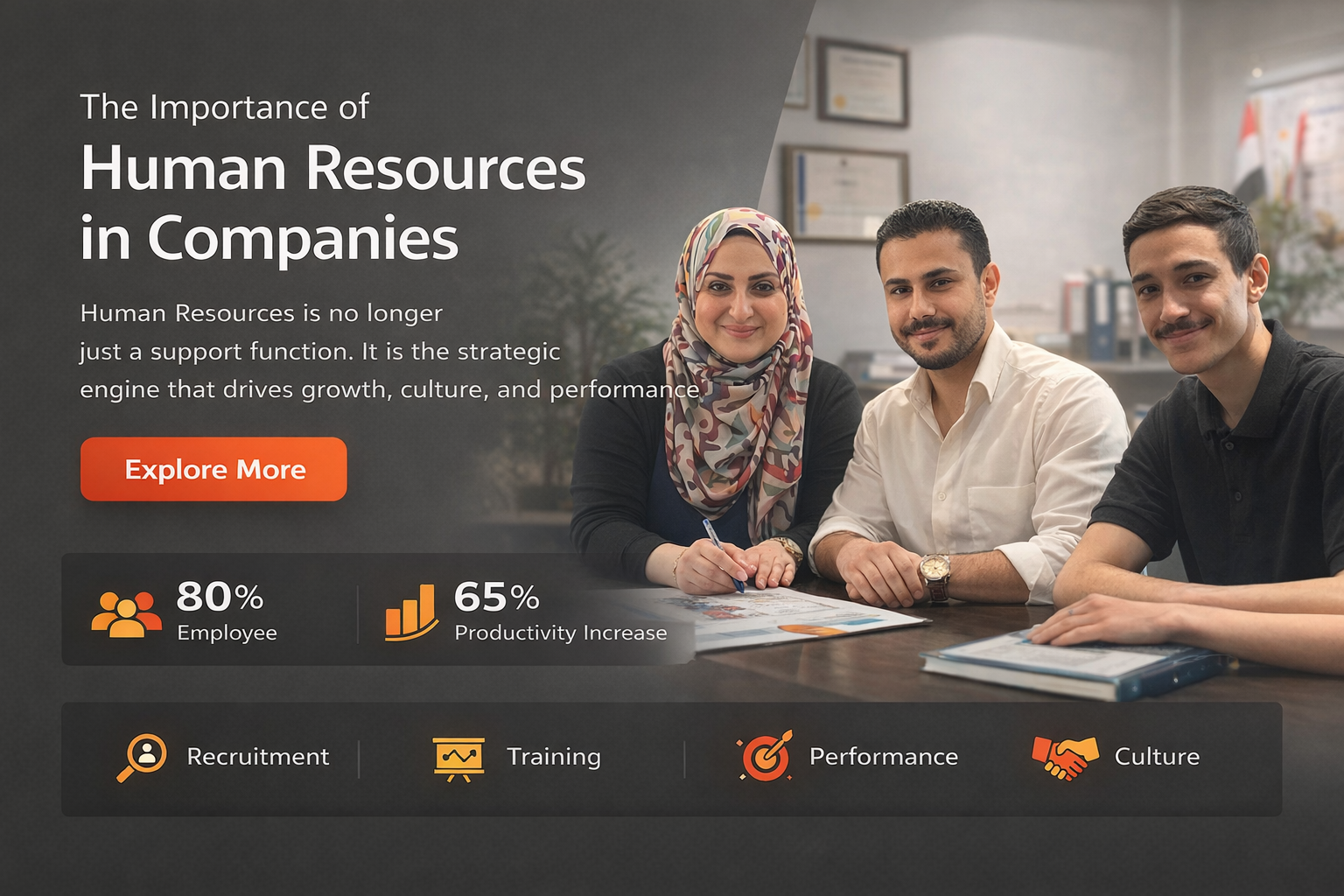
When most of us hear ‘HR,’ we think of hiring, or the person we go to when there’s a problem. But the real Human Resources function in companies goes far beyond that. Imagine a company as a sports team; the HR department is the coach, the nutritionist, and the team psychologist, all in one — the engine ensuring every ‘player’ is performing at their best.
Beyond administrative tasks, HR’s true importance lies in being a strategic partner to both management and employees, investing in people as the company’s most valuable asset. Understanding this role isn’t just important for the business — it’s your personal key to growth, whether you’re building your career or exploring current opportunities at Enjaz.
Who is "HR"? The Real Difference Between Personnel and Human Resources
When you think of “Personnel Affairs,” you’re likely thinking of the administrative side of the equation. This is the function responsible for keeping daily operations running smoothly: preparing employment contracts, tracking attendance, logging leave, and ensuring your salary is processed correctly. It can be considered the company’s “organizational engine” that ensures all procedures follow the system. It’s an essential and vital role, but it focuses heavily on current operations.
However, the role of a modern Human Resources department doesn’t stop there. This is where the concept of “Strategic Human Resources” comes in, which looks at the bigger picture and the future of the company and its employees. This side doesn’t just ask, “Did the employee show up today?” but rather, “How can we help this employee develop and grow to become a future leader?” It’s concerned with building a positive company culture, creating effective training programs, and planning for the talent the company will need years from now.
So, what’s the difference between Personnel and Human Resources for you as an employee? Simply put, “Personnel” ensures your rights today, while “Human Resources” invests in your future.
A company that balances both doesn’t just run its operations efficiently; it strengthens the entire Human Resources function in companies by fostering creativity and loyalty.
How Does HR Find the Right Employees? Behind the Scenes of the Hiring Process
Building a dream team starts with understanding how the Human Resources function in companies approaches a fundamental question: ‘Who exactly do we need?’ Before posting any job ad, the HR department conducts what’s known as job analysis and design. Imagine they’re preparing a detailed recipe; they define the ingredients (experience and skills), the preparation steps (daily tasks), and the final dish’s appearance (job objectives). This step ensures the search is focused and targeted from the very beginning to find the perfect fit.
After creating this “recipe,” the process turns into an organized talent hunt, which usually follows these steps:
Posting the Ad: Writing an attractive job description and publishing it where potential candidates are active.
Attracting and Screening Candidates: Receiving resumes and carefully reviewing them to select those that best match the “recipe.”
Conducting Interviews: Organizing meetings to evaluate candidates more deeply, in collaboration with the position’s direct manager.
Final Selection: Assisting the manager in making the decision and extending a job offer to the best candidate.
What Happens During the Interview
This is why you might be asked interview questions like, “Give me an example of a challenge you faced and how you handled it.” The goal isn’t to embarrass you; it’s a practical way to verify that you possess the skills required by the recruiter that were identified in the initial job analysis. It’s a method to see your skills in action rather than just hearing you talk about them.
Ultimately, the hiring decision is a collaborative one. The HR professional acts as a strategic partner to the manager; the manager assesses technical expertise, while HR evaluates the candidate’s fit with the company culture and their soft skills. Curious what these HR roles actually look like day to day? See our breakdown of HR jobs in Egypt.
In practice, this means a candidate might ace the technical interview with the hiring manager but still not move forward if HR senses they won’t mesh with the team’s working style — and vice versa. Both perspectives matter equally in the final decision. But HR’s role doesn’t end when the contract is signed. What happens after you join the team, or if you face a challenge in your work?
What to Do If You Face a Problem? HR's Role as a Mediator and Skill Developer
Once you join the company, the HR department becomes your partner on your career journey. Imagine you have a disagreement with a colleague or a misunderstanding with your manager. This is where an important HR role known as Employee Relations comes into play. The HR professional acts as a neutral mediator, listening to all parties to achieve a constructive and fair resolution to employee conflicts. The goal isn’t to punish one party for the benefit of another, but to rebuild communication bridges and ensure a healthy, respectful work environment for everyone. It’s your safe haven to discuss the challenges you face with confidentiality and professionalism.
But HR’s role isn’t limited to solving existing problems; it extends to helping you grow and avoid them in the future. This is the domain of Training & Development. Successful companies understand that investing in your skills is an investment in their own success. Therefore, the HR department works to identify training needs and organize workshops and courses to develop your abilities, whether they are new technical skills for a specific software or soft skills like effective communication and leadership.
You can also be proactive and talk to the HR department about your career ambitions and the skills you wish to acquire. They can guide you on the best ways to achieve your goals within the company and perhaps provide opportunities to attend specialized training courses. Your professional growth not only enhances your experience but also increases your value to the company. But how is this value translated into something more than just a monthly salary?
Your Salary Isn't Everything: How HR Determines Your Full Value to the Company
In reality, the monthly salary you see in your bank account is just one part of the story. One of the most important responsibilities of an HR manager is to design an integrated package called Compensation & Benefits. This package includes not only the base salary but also other valuable elements like health insurance for you and your family, transportation or housing allowances, and paid annual leave. All these components together constitute your total value to the company, or what’s known as “total rewards.”
But how does the HR department determine these figures? The process is not at all random; it aims to achieve Pay Equity. HR works on two fronts: first, ensuring that employees performing similar roles within the company receive comparable salaries to maintain internal equity. Second, they monitor the salaries of other companies in the market to ensure their offers remain competitive and capable of attracting and retaining top talent. Their goal is to be fair to their current employees and attractive to new ones.
That’s why when you evaluate a job offer in the future, don’t just look at the base salary figure. Look at the complete picture: health insurance, allowances, and the growth opportunities we discussed earlier. They are all part of the value the company offers you. But are money and benefits all that matter? Certainly not. There’s another hidden factor that might be even more important—the one that makes you feel comfortable and a sense of belonging.
Why Do You Feel Comfortable in Some Companies but Not Others? The Secret of "Company Culture" and HR's Role
Imagine that every company has its own “personality,” just like people. This personality is what we call Company Culture. It answers questions like: Is the work environment formal or friendly? Is asking questions encouraged, or is it better to just follow instructions? Does the team celebrate successes together? This unwritten atmosphere is the main reason you feel a sense of belonging and comfort at your workplace—or the complete opposite.
Here, the HR department’s role as the guardian and cultivator of this culture becomes prominent. When HR looks for new employees, it doesn’t just focus on their skills; it tries to select people whose values align with the company’s values. They also design training and recognition programs that reinforce desired behaviors, such as teamwork or innovation. This is how the Human Resources function in companies demonstrates its true value—by building a cohesive team that works with one spirit toward a common goal.
In the end, a good culture doesn’t just benefit the company; it benefits you directly. When you work in a positive work environment that respects you and values your contributions, your job satisfaction increases and your stress levels decrease, which reflects on your productivity and happiness. Nurturing this culture is one of the subtle but crucial roles of HR. But their role doesn’t stop here; they also participate in planning the entire future of the company through their strategic role.
How HR Adapts Culture for Remote and Hybrid Teams
Company culture doesn’t stop at the office door — increasingly, it doesn’t even require an office at all. As more companies embrace remote and hybrid work, HR faces a new challenge: how do you build a sense of belonging and shared values when the team isn’t physically together?
This is where HR gets creative. Virtual team-building activities, clear communication norms, and intentional check-ins all become part of the toolkit. HR also has to rethink how it measures engagement and performance — since “being seen at your desk” is no longer a meaningful signal of productivity or commitment.
For companies navigating this shift, HR’s role becomes even more important, not less. Someone still needs to ensure that culture, fairness, and connection survive the transition to a more distributed way of working.
The Human Resources Function in Companies: Planning for the Future
Far from daily tasks, the Human Resources function in companies plays a role similar to that of a company’s future architect. Instead of just reacting to problems as they arise, HR sits with senior management to help them plan for the years ahead. This is what transforms them from an administrative department into a strategic partner that ensures the company possesses its most crucial asset for success: the right people.
One of the most important aspects of this role is Workforce Planning. The HR department doesn’t wait for a position to become vacant to start searching. Instead, it proactively asks, “What skills will our company need in three or five years?” If the company plans to launch new digital products, HR starts now to find experts in that field or creates plans to train current employees, ensuring the company is prepared for the future.
Succession Planning: Preparing for Leadership Transitions
Similarly, what happens if a key manager decides to leave suddenly? This is where Succession Planning comes in. HR works to identify promising employees who can take on leadership positions in the future and helps prepare and develop them. To make such decisions, they don’t rely on personal opinions but on precise data from specialized systems known as Human Resource Information Systems (HRIS), which act as the digital brain storing all important information about employee performance and skills.
In this way, HR is no longer just an order-taker but has become an essential partner ensuring the company has the talent capable of facing future challenges. This is exactly the strategic partnership firms like Enjaz provide to businesses across Egypt—helping them plan, hire, and develop the workforce they’ll need for the future. This shift from an administrative to a strategic role has made the HR function a vital and exciting field. Are you thinking of being a part of it?
Thinking About an HR Career? Your First Steps into the Field
If this strategic world piques your interest, explore current opportunities at Enjaz — the good news is that entering the HR field doesn’t always require prior experience; it relies heavily on your soft skills. Before seeking complex certifications
. Before seeking complex certifications, ask yourself: Do you have the essential qualities that make a successful HR professional?
Excellent communication skills: To listen and speak clearly.
Empathy and the ability to understand others: To put yourself in the employee’s shoes.
Organization and attention to detail: To manage multiple tasks accurately.
Maintaining confidentiality: Because you will handle sensitive information.
Practically, what does the career path in an HR department look like? It often starts with entry-level positions that don’t require extensive experience, such as an “HR Coordinator” or “HR Administrative Assistant.” In these roles, you won’t be expected to create grand strategies. Instead, you’ll be the primary support for the team, helping to organize interviews, prepare new employee paperwork, and answer daily inquiries. It’s the best hands-on way to learn the basics of the field from the inside. Consultancies like Enjaz, which manage HR functions for businesses across Egypt, are often a great place to gain this kind of hands-on experience early in your career. If you’re starting with no experience, our guide on finding HR jobs in Egypt without experience can help.
Once you get your foot in the door, you can accelerate your professional growth. Taking training courses or obtaining accredited certifications in human resource management will enhance your theoretical understanding and open doors to higher positions like “HR Specialist.” Remember, a successful career in this sector is a blend of practical experience, personal skills, and continuous learning. For a full breakdown of HR roles and requirements, see our guide on HR jobs in Egypt.
HR Isn't Just a Department, It's a Partner in Your Success
The Human Resources function in companies is no longer just about routine procedures; it has become a driver of your personal success and the success of the company you work for.
Next time you interact with this department, don’t think of them as a remote administration, but as partners in your journey. Whether you’re looking for training, need to resolve an issue, or are planning your next career move, remember that those in HR jobs are there to support you. Be proactive; this new understanding is your key to fully leveraging all available resources to achieve your goals. And if you’re exploring where to grow your own HR career, or looking for the right HR partner for your business, Enjaz is here to help.
How can we help you?
Contact us or submit a business inquiry online at Enjaz Consultancy EXCELLENCE is no longer a dream